










QUICK SUMMARY
This blog explores how AI voice agents work, where they fit into customer service operations, and how businesses can deploy them effectively. Read on to discover the key benefits, use cases, and deployment considerations for modern contact centers.
Every November, you hire fifteen seasonal agents. By mid-December, five have quit. Three are still in training. The rest are handling calls at maybe 60% of full speed. The customers calling in don’t know any of this. They just know they’re on hold longer than last year.
The seasonal hiring scramble has been a contact center reality for decades. It’s also exactly the kind of capacity problem AI voice agents were built to solve, not because they’re cheaper, but because they’re available in November, no recruiter required.
Contact centers today face a difficult balance. They need to handle growing call volumes while maintaining service quality and controlling costs. Hiring and training alone can no longer solve every capacity challenge.
AI voice agents in customer support help bridge that gap. They can handle routine conversations, support customers around the clock, and reduce pressure on human agents during peak periods.
In this blog, we’ll look at what AI voice agents are, how they work, and how they can help improve contact center efficiency and customer service operations.
Let’s start by understanding what an AI voice agent is and how it interacts with customers.
What is an AI Voice Agent and How Does It Work?
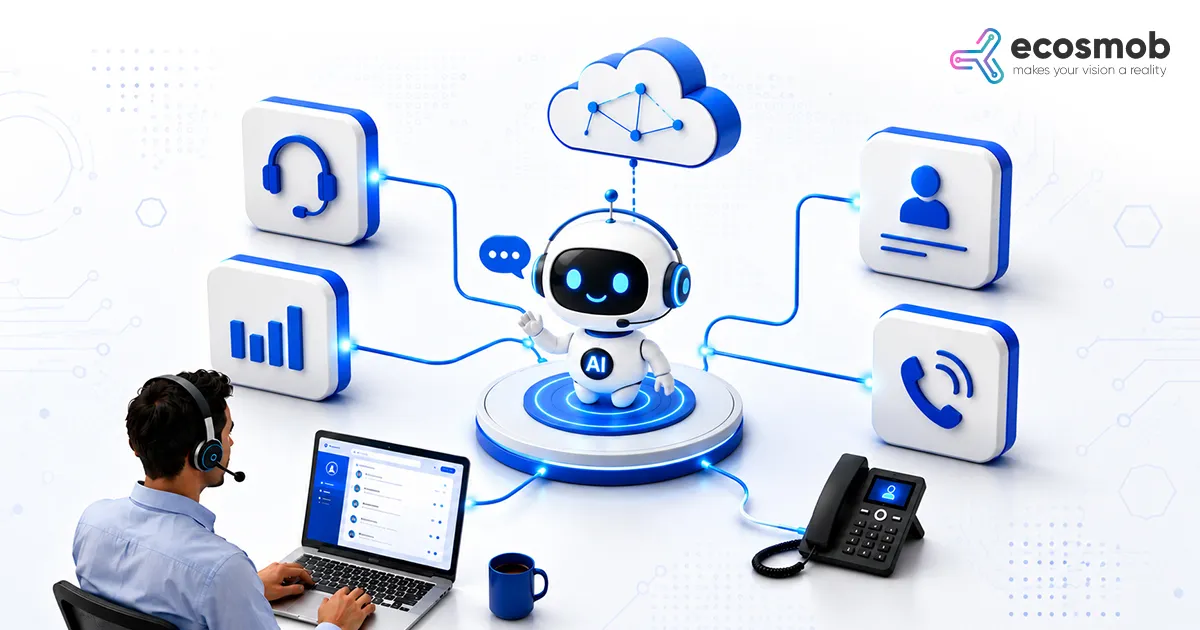
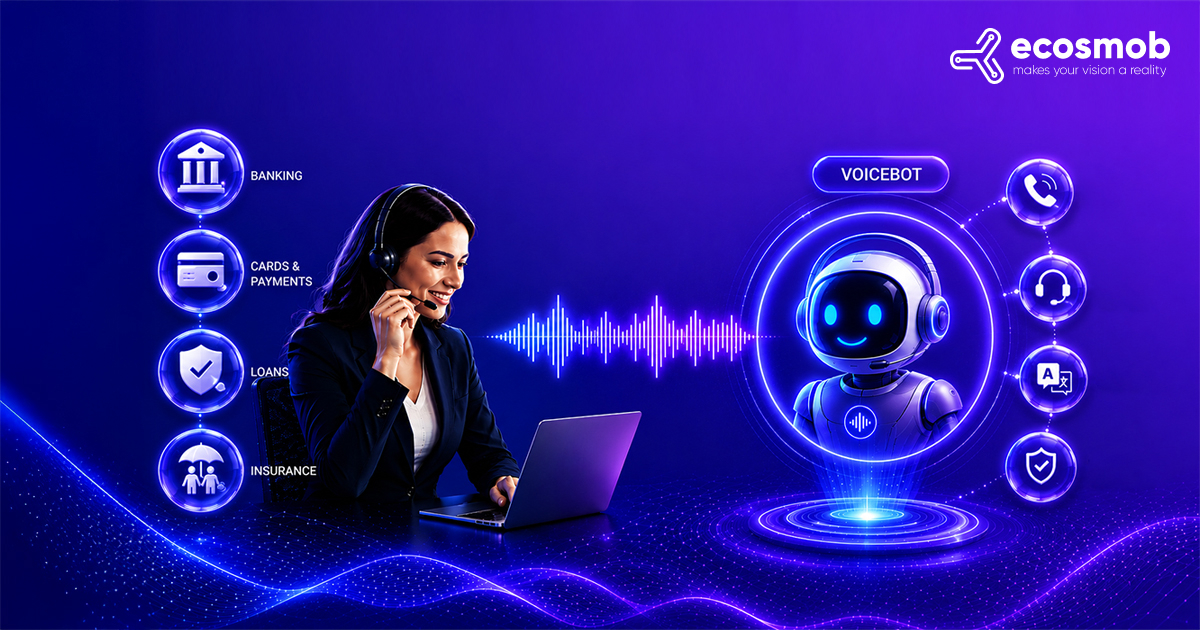
An AI voice agent is a software-powered virtual agent that can understand spoken language, respond naturally, and complete tasks during a phone call. Businesses use AI voice agents to automate customer service, customer support, call routing, appointment scheduling, and other contact center operations.
Unlike traditional call handling systems, AI voice agents can understand customer intent and engage in natural conversations. Customers can simply speak instead of navigating through complex menu options.
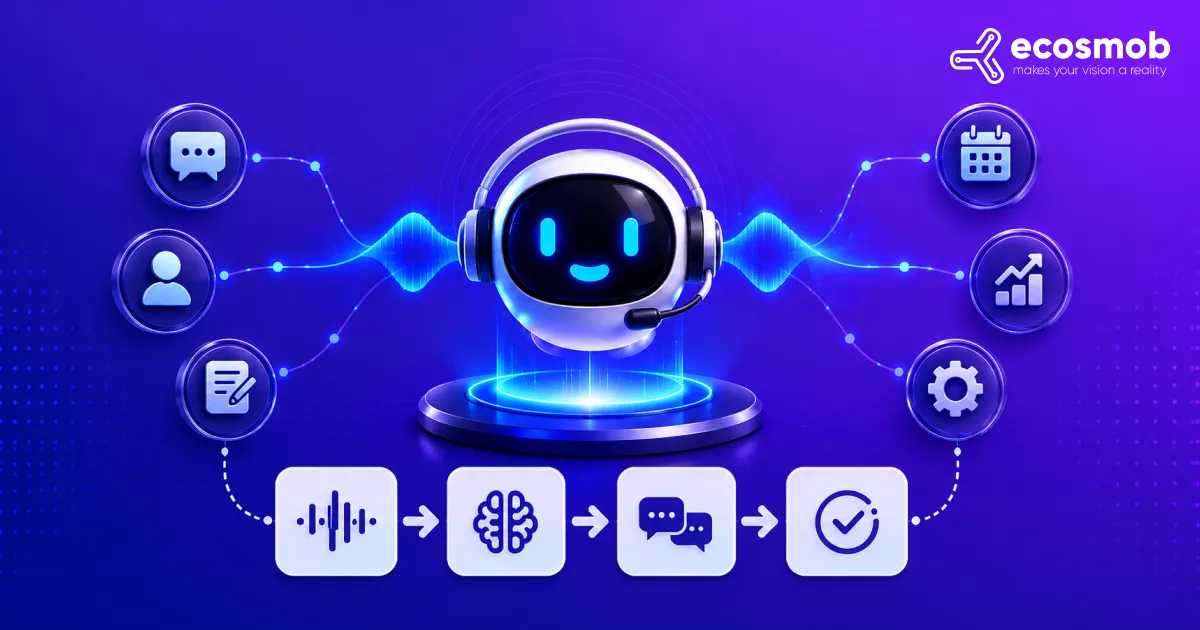
An AI voice assistant for businesses converts a customer’s speech into text, understands the intent behind the request, retrieves the required information, and responds naturally. It can also integrate with CRM, billing, and support systems to access customer data and complete actions in real time.
Core Technologies Behind AI Voice Agents
- Speech Recognition converts spoken words into text.
- Natural Language Processing (NLP) understands intent and context.
- Large Language Models (LLMs) generate relevant responses.
- Text-to-Speech (TTS) converts responses into human-like voice output.
- Business Integrations connect the voice agent with CRM, billing, and support systems.
AI Voice Agent vs Traditional Call Handling Systems
Traditional call handling systems rely on predefined rules and menu-based interactions. Customers often need to follow fixed prompts before reaching the information they need.
AI voice agents can understand natural conversations, answer follow-up questions, and adapt responses based on the context of the discussion. This creates a smoother customer experience and reduces the effort required to resolve common requests.
The next question is where they make the biggest impact.
Customers don't notice staffing shortages, only wait times. AI voice agents can reduce queues.
How Do AI Voice Agents Improve Contact Center Efficiency?
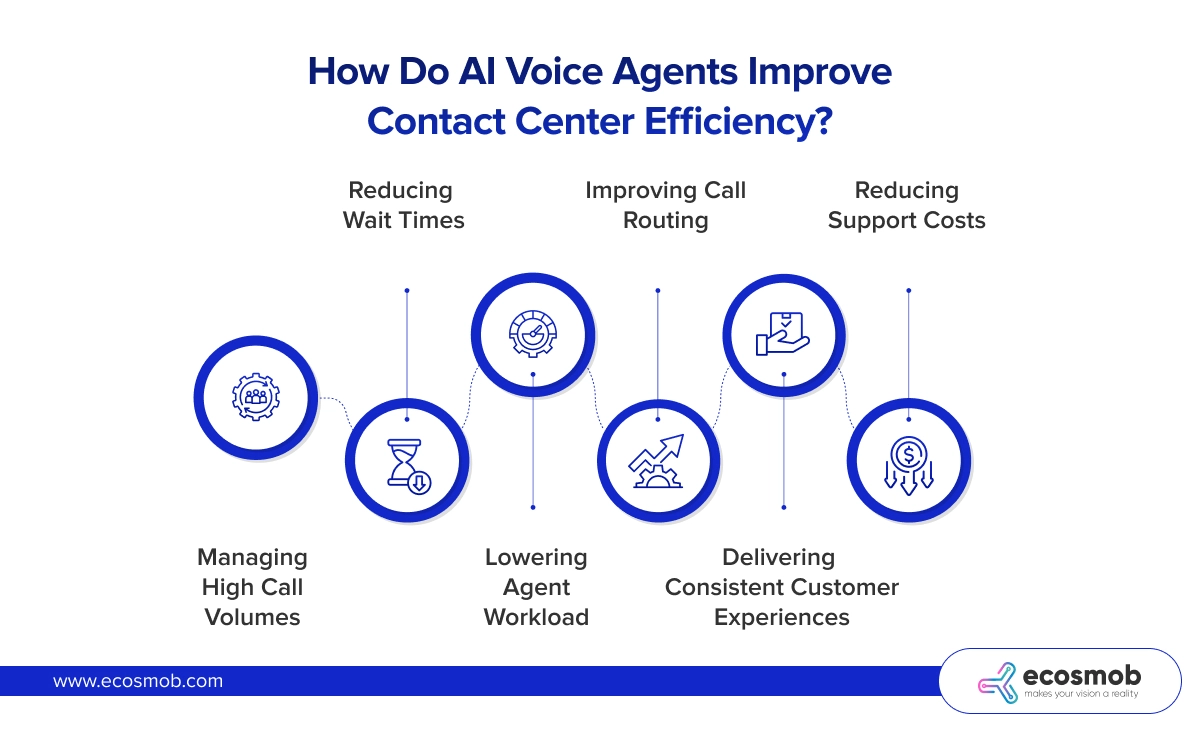 An AI voice agent for L1 support improves contact center efficiency by handling routine customer inquiries, reducing wait times, and providing faster assistance. By automating repetitive tasks and first-level support requests, it allows human agents to focus on more complex issues that require critical thinking and personalized attention.
- Managing High Call Volumes
Contact centers often experience sudden spikes in call traffic. Seasonal demand, service disruptions, and product launches can quickly overwhelm support teams.
AI voice agents can manage thousands of conversations simultaneously. This helps businesses handle high call volumes without increasing staffing levels for every demand surge.
- Reducing Wait Times
Long queues are one of the biggest causes of customer frustration. Many customers simply want quick answers to straightforward questions.
AI voice agents provide immediate assistance without placing callers on hold. Customers can get information, complete tasks, or resolve simple issues within minutes.
- Lowering Agent Workload
A large portion of contact center calls involve repetitive requests. These include order updates, appointment confirmations, account inquiries, and payment-related questions.
AI voice agents can automate these interactions. Human agents spend less time on routine tasks and more time solving complex customer problems.
- Improving Call Routing
Incorrect call transfers increase handling times and create poor customer experiences. Customers often repeat the same information multiple times before reaching the right department.
AI voice agents identify customer intent at the beginning of a conversation. Calls can then be routed to the most appropriate team or specialist without unnecessary transfers.
- Delivering Consistent Customer Experiences
Service quality can vary between agents, locations, and shifts. This inconsistency can affect customer satisfaction and brand perception.
AI voice agents follow the same processes and response standards during every interaction. This helps businesses deliver a more reliable customer experience across channels.
- Reducing Support Costs
Scaling a contact center traditionally requires hiring, training, and managing additional agents. These costs increase as customer demand grows.
AI voice agents help businesses support more customers without proportionally increasing operational expenses. This makes customer service operations more scalable and cost-efficient.
The next step is understanding where AI voice agents deliver the most value in customer service operations.
How are AI Voice Agents Used for Customer Service and Customer Support?
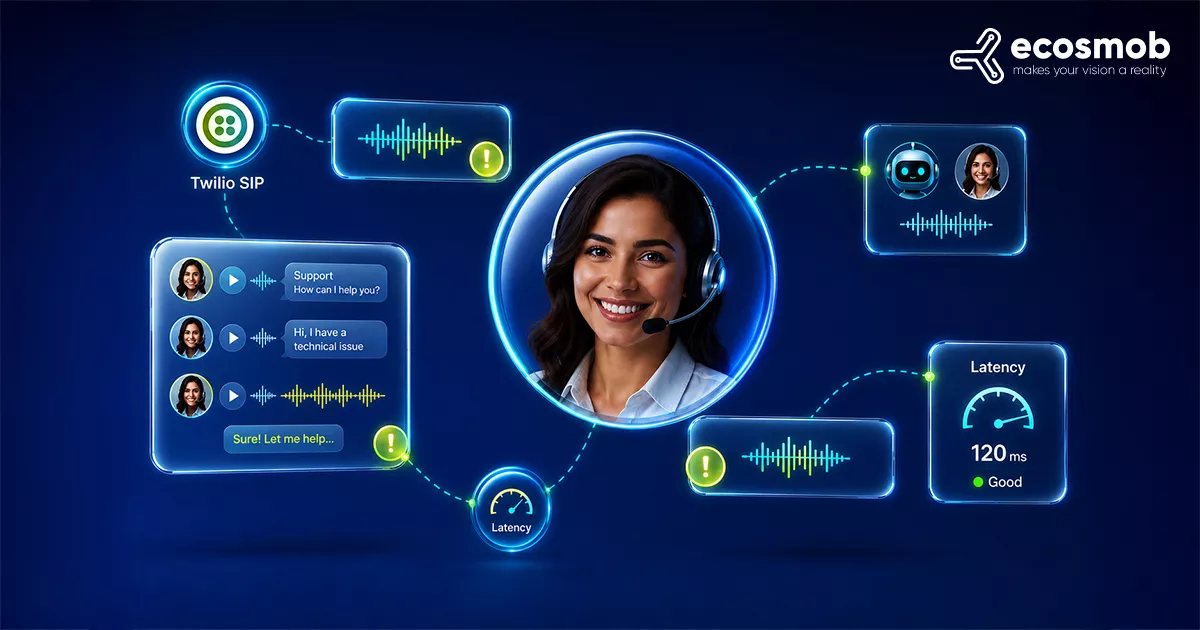
A Custom voicebot connector enables AI voice agents to integrate with business systems and handle customer service interactions more efficiently. These AI-powered assistants manage routine inquiries, automate common tasks, and provide faster support, helping businesses improve response times while reducing the workload on customer support teams.
- Customer Inquiry Handling
AI voice agents can answer frequently asked questions related to products, services, accounts, and policies. This helps customers get information without waiting for a live agent.
- Appointment Scheduling
Customers can book, reschedule, or cancel appointments through a voice conversation. This reduces manual effort and improves scheduling efficiency.
- Order Status Updates
AI voice agents can provide real-time order and delivery updates by connecting with business systems. Customers receive quick answers without agent involvement.
- Account Verification
Before sharing sensitive information, AI voice agents can verify customer identities using predefined authentication methods. This helps improve security and compliance.
- Technical Support Assistance
For common technical issues, AI voice agents can guide customers through troubleshooting steps and resolve basic problems without escalation.
- After-Hours Customer Service
AI voice agents remain available outside regular business hours. Customers can receive support anytime without depending on agent availability.
Customer support is just one part of the equation.
How are AI Voice Agents Used in Telecom Customer Support?
AI voice agents are increasingly being adopted in telecom customer support, where the right architecture and compliance for AI agent deployments are essential for automating high-volume service requests, improving response times, and enhancing subscriber experiences. They enable telecom providers to deliver efficient support without adding operational complexity.
- Billing and Payment Assistance
Billing-related inquiries are among the most common reasons customers contact telecom providers. Customers often need information about invoices, payments, due dates, or charges.
AI voice agents can answer billing questions, provide payment details, and assist with account-related requests without agent involvement.
- Service Activation Requests
Subscribers frequently contact support for new service activations or plan-related requests. Handling these interactions manually can increase workloads for support teams.
AI voice agents can guide customers through activation processes and collect the required information during the conversation.
- Plan Upgrades and Changes
Customers regularly inquire about plan upgrades, add-on services, and package changes. These requests often follow standard workflows.
AI voice agents can explain available options, capture customer preferences, and initiate plan modification requests.
- Network Issue Reporting
When service disruptions occur, contact centers often experience a surge in call volumes. This can create long wait times for customers seeking assistance.
AI voice agents can collect issue details, provide outage updates, and direct customers to the appropriate support channels when needed.
- Multilingual Subscriber Support
Telecom providers serve customers across different regions and language preferences. Maintaining multilingual support teams can be challenging and expensive.
AI voice agents can communicate in multiple languages and provide consistent support experiences to a broader customer base.
Successful results depend not only on the technology itself but also on how it is deployed.
The costliest calls are often the ones that could be automated. Explore smarter customer support.
How to Deploy AI Voice Agents in a Contact Center?
Deploying a production ready voicebot for call centers requires clear business goals, well-defined use cases, and seamless integration with existing systems. Taking a structured approach helps businesses improve efficiency while maintaining a high standard of customer service.
- Define Business Goals
The first step is identifying what the AI voice agent should achieve. Goals may include reducing call volumes, lowering wait times, improving customer service, or reducing operational costs.
Clear objectives help determine where automation can deliver the greatest impact.
- Identify Suitable Call Flows
Not every customer interaction should be automated immediately. Businesses should start with repetitive and high-volume call types that follow predictable patterns.
Common examples include account inquiries, appointment scheduling, order tracking, and billing support.
- Integrate Business Systems
AI voice agents perform best when connected to the systems employees already use. Integrations with CRM platforms, ticketing systems, billing software, and customer databases provide access to real-time information.
This allows the voice agent to deliver more accurate and personalized responses.
- Train and Test Voice Agents
Before deployment, businesses should train AI voice agents using real customer scenarios and conversation flows. Thorough testing helps identify gaps and improve response accuracy.
This stage is essential for delivering a smooth customer experience from day one.
- Monitor and Optimize Performance
Deployment is only the beginning. Businesses should continuously monitor metrics such as call resolution rates, customer satisfaction, containment rates, and average handling times.
Regular optimization helps AI voice agents adapt to changing customer needs and business requirements.
Before investing in AI voice agents, many businesses compare them with traditional IVR systems.
AI Voice Agent vs IVR: What Is the Difference?
The main difference between an AI voice agent and an dynamic IVR solution is that AI voice agents understand natural conversations, while IVR systems rely on predefined menus and call flows. Both can automate customer interactions, but their capabilities and customer experiences differ significantly.
| Features | AI Voice Agent | Traditional IVR |
| Interaction Style | Natural conversation | Menu-based navigation |
| Customer Input | Free-form speech | Fixed commands |
| Intent Understanding | Context-aware | Rule-based |
| Follow-Up Questions | Supported | Limited |
| Personalization | High | Basic |
| Call Routing | Intent-based | Menu-based |
| Issue Resolution | Simple to complex requests | Simple requests only |
| Customer Effort | Lower | Higher |
| Scalability | High | Moderate |
For businesses looking to improve contact center efficiency, AI voice agents offer greater flexibility and a more natural customer experience than traditional IVR systems.
Another common comparison is between AI voice agents and voice bots.
AI Voice Agent vs Voice Bot: What Is the Difference?
An AI voice agent and a voice bot can both automate phone conversations, but AI voice agents are designed to handle more dynamic and context-aware interactions. They can understand intent, manage follow-up questions, and complete more complex tasks.
| Feature | AI Voice Agent | Voice Bot |
| Conversation Style | Context-aware | Script-driven |
| Intent Understanding | Advanced | Basic |
| Follow-Up Handling | Supported | Limited |
| Decision-Making | Dynamic | Rule-based |
| Personalization | High | Limited |
| Task Complexity | Simple to complex | Simple tasks |
| Customer Experience | More natural | More structured |
While voice bots work well for basic automation, AI voice agents are better suited for customer service, customer support, and contact center environments where conversations can vary from one caller to another.
Capabilities are important, but cost is often the deciding factor for deployment.
How Much Does an AI Voice Agent Cost?
The cost of deploying the best bots for voice automation depends on factors such as implementation complexity, integration requirements, call volumes, and the level of customization needed. Since every business has different operational needs, there is no one-size-fits-all pricing model.
- Key Cost Factors
Several elements influence the overall investment. These include the number of conversations handled, supported languages, integration requirements, AI model complexity, and reporting capabilities.
Businesses with highly customized workflows typically require greater implementation effort than those automating standard customer interactions.
- Deployment Models
Some businesses choose cloud-based AI voice agent solutions for faster deployment and lower infrastructure costs. Others prefer private or on-premise deployments for greater control, security, and compliance.
The right model depends on business goals, regulatory requirements, and scalability needs.
- Expected ROI
The value of an AI voice agent extends beyond cost savings. Businesses often see improvements in response times, agent productivity, service availability, and customer satisfaction.
By automating routine interactions, organizations can support more customers without proportionally increasing staffing costs. Over time, this can lead to measurable operational efficiencies and a stronger return on investment.
Cost savings matter, but they often raise another question about the future role of human agents.
Routine queries keep agents from complex issues. See how AI voice agents can help.
Can AI Voice Agents Replace Human Agents?
AI voice agents can handle many routine customer interactions, but they are not designed to replace human agents entirely. The most effective contact centers use AI voice agents and human agents together to improve efficiency and customer experiences.
- Routine Tasks
AI voice agents are well-suited for repetitive and process-driven tasks. These include account inquiries, appointment scheduling, order tracking, payment assistance, call routing, and basic troubleshooting.
They can also manage high call volumes and provide support outside regular business hours.
- Complex Interactions
Some customer interactions require empathy, judgment, negotiation, or complex decision-making. Sensitive complaints, escalations, and unique problem-solving situations often benefit from human involvement.
These conversations require context and emotional understanding that AI cannot fully replicate.
- Human-AI Collaboration
Rather than replacing human agents, AI voice agents help them work more efficiently. AI can handle routine interactions and gather customer information before transferring the conversation when needed.
This allows human agents to spend more time resolving complex issues and delivering personalized support.
The future of customer service is not AI versus humans. It is AI and humans working together to create faster, more efficient, and more scalable support operations.
With the key concepts covered, let’s wrap up!
The Bottom Line?
AI voice agents help contact centers handle more conversations with greater efficiency by reducing wait times, automating routine tasks, and supporting human agents. Their growing adoption is reflected in the market, which was valued at USD 2.5 billion in 2025 and is projected to reach USD 35.2 billion by 2033 at a CAGR of 39.0%, driven by increasing use of voice-enabled technologies across industries.
As customer expectations continue to grow, AI voice agents provide a scalable way to improve support operations without increasing complexity.
At Ecosmob, we help businesses build and deploy custom AI voice agent solutions for customer service, telecom, and contact center environments.
FAQs
What is an AI voice agent?
An AI voice agent is a virtual assistant that can answer and make phone calls, understand customer requests, and perform tasks such as answering questions, routing calls, or collecting information without requiring a human agent for every interaction.
How do AI voice agents improve contact center efficiency?
AI voice agents handle repetitive and high-volume queries instantly, reducing wait times and call queues. They also allow human agents to spend more time on complex issues, which improves productivity and helps contact centers serve more customers with the same team.
Can AI voice agents replace human agents?
No. AI voice agents are best used for routine conversations and simple tasks. Human agents are still needed for complex issues, sensitive conversations, and situations that require judgment, empathy, or negotiation.
What types of customer interactions can AI voice agents handle?
AI voice agents can answer FAQs, provide order or account updates, schedule appointments, process payments, collect customer information, qualify leads, and route calls to the right department when human assistance is needed.
How do AI voice agents reduce contact center costs?
By automating routine calls and handling multiple conversations at once, AI voice agents reduce the need for additional staff during peak periods. This lowers operational costs while helping businesses maintain service quality as call volumes increase.